
Ways to Stay Safe Before, During, and After a Flood
Don’t wait until flooding is expected to prepare your household. Take these steps to ensure you’re ready for an emergency.
1. Sign up for alerts at SARiverFlood.org.
For more info, scroll down to see the How to Use SARiverFlood.org section below.
2. Turn on emergency alerts on your phone.
iPhone
- Go to Settings > Notifications.
- Scroll down to the bottom of the screen.
- Under Government Alerts, turn the type of alert on or off.
Android
- Open the Settings app by tapping the gear icon on your home screen or app drawer.
- Go to Safety and Emergency > Wireless Emergency Alerts.
- Use the toggles to choose which alerts you want to get.
3. Sign up for alerts through the City of San Antonio.
4. Make a flood plan.
- Make a plan for your household so that everyone knows what to do, where to go, and what you will need to protect yourselves from flooding.
- Learn and practice evacuation routes, shelter plans, and flash flood response.
- Download an emergency plan form to document your plans, emergency contacts, and meeting locations.
- Keep documents in a water- and fire-resistant container, and create password-protected digital copies
5. Create an emergency supply kit.
- Include items such as non-perishable food, clean water, a change of clothes, prescriptions, medical supplies, a first-aid kit, emergency radio, and flashlights.
- Use a supply kit checklist to make sure you’ve considered everything your kit might need.
6. Know your flood risk, and prepare your home accordingly.
- Search your address on the River Authority’s Draft Floodplain Viewer and use FEMA’s Flood Map Service Center to learn more about the types of flood risks in your area.
- If your home is in an area with high flood risk, elevate the furnace, water heater, and electric panel if possible.
- Consider installing “check valves” to prevent flood water from backing up into the drains of your home.
7. Consider flood insurance.
- Flood losses are not typically covered under renter and homeowner’s insurance policies.
- Get a quote through FEMA’s National Flood Insurance Program (NFIP) Quote Tool.
- Don’t wait until a storm is approaching. There’s a 30-day waiting period before flood insurance goes into effect.
- Consider flood insurance even if you’re not in an area with high flood risk. About one quarter of all flood insurance claims come from low-risk areas.
Use the following advice when flooding is likely to happen, or already happening in your area.
1. Be prepared to evacuate.
- Charge cell phones and other necessary devices.
- Check batteries in flashlights and portable radios.
- Have your emergency supply kit nearby.
- Check reliable weather sources like weather.gov, and stay tuned to local radio or television stations providing updates.
- Tune into San Antonio’s National Weather Service frequency 162.550 on your emergency radio.
- Pay close attention to safety instructions, and obey evacuation orders.
2. If you’re ordered to evacuate, secure your home first and check SARiverFlood.org to see if your route is safe to travel.
- Bring in outdoor furniture if possible, and move essential items to an upper floor.
- Turn off utilities at the main switches or valves if instructed to do so.
- Unplug appliances and electronics before you go.
3. Don’t attempt to walk through moving water.
- Just a few inches of fast-moving water can knock you off your feet. Use a stick to check the firmness of the ground in front of you.
- Avoid water that may have electricity in it. Stay away from downed power lines. Don’t enter any room where water is covering electrical outlets or power cords are submerged.
4. Turn Around, Don’t Drown®. If you see water covering the road, turn around and find a different route.
- If your car is trapped in fast-moving floodwater, stay inside.
- If water is rising inside the car, get to the roof.
- Do not camp or park your vehicle along streams, rivers, creeks, drainage channels, canyons, or other areas
1. Continue to monitor the weather, and stay tuned to local radio or television stations for updates and instructions.
- If you evacuated your home, return home only when authorities say it’s safe.
- Stay away from damaged areas unless your assistance has been specifically requested by police, fire, or a relief organization.
- Do not enter any flood-damaged building without being told it’s safe first. Don’t enter a flooded home while the electricity is on.
- Listen for information on whether the community’s water supply is safe to drink.
- Listen for information on assistance that may be provided by the state or federal government, or other organizations like the American Red Cross.
2. Continue to avoid floodwaters.
- Avoid walking through standing water, as it may contain toxins, chemicals, raw sewage, sharp objects, or electric charge that can hurt you.
- Flooding may have caused familiar places to change.
- Floodwaters often erode roads and walkways.
3. Avoid driving unless it’s necessary.
- Check SARiverFlood.org to see if any roads along your route are closed.
- Pay close attention to road closures and other cautionary signs.
- Be careful in areas that flooded, even after floodwaters have receded. Roads may have weakened and could collapse when you attempt to drive over them.
4. Follow safety guidelines for cleaning up after a flood.
- Wear protective equipment such as hard hats, goggles, waterproof steel-toe boots, heavy work gloves, and N95 masks.
- Turn off the electricity at the main breaker or fuse box, even if the power is off in your community. That way, you can decide when your home is dry enough to turn it back on.
- Service damaged septic tanks, cesspools, pits, and leaching systems as soon as possible.
- Clean and disinfect everything that got wet, as flood waters can contain sewage and harmful chemicals.
- If you hire cleanup or repair contractors, check references and be sure they are qualified to do the job.
- Be wary of people who drive through neighborhoods offering help in cleaning up or repairing your home.
5. Stay healthy and seek support.
- Contact your family and loved ones to update them on your safety and location.
- Contact the American Red Cross for information on support available in your area.
- Rest often, and eat well.
- Keep a manageable schedule. Make a list and do jobs one at a time.
Protecting the Most At-Risk Individuals
Some members of our community are especially vulnerable to flood dangers, including unhoused people, individuals with disabilities, children, and elderly people.
When making flood safety plans, consider if any member of your household may need extra help preparing or evacuating, and plan accordingly.
If you are unhoused and flooding is possible, move to higher ground or find the nearest shelter. If you can access a phone, dial 2-1-1 to connect with local social services and find emergency housing.
If you have a family member or friend who is unhoused, reach out to them and see what you can do to help them stay safe.
How to Use
SARiverFlood.org
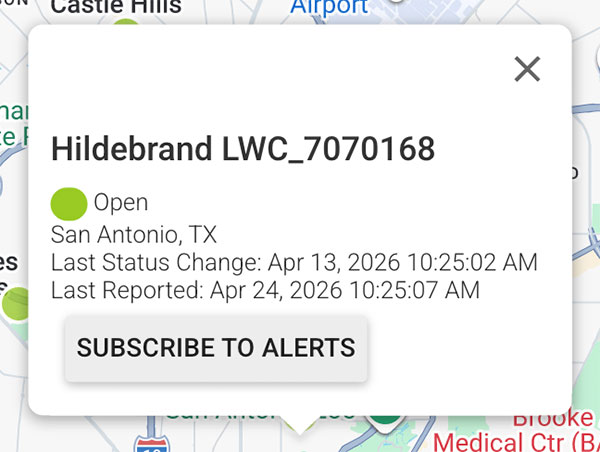
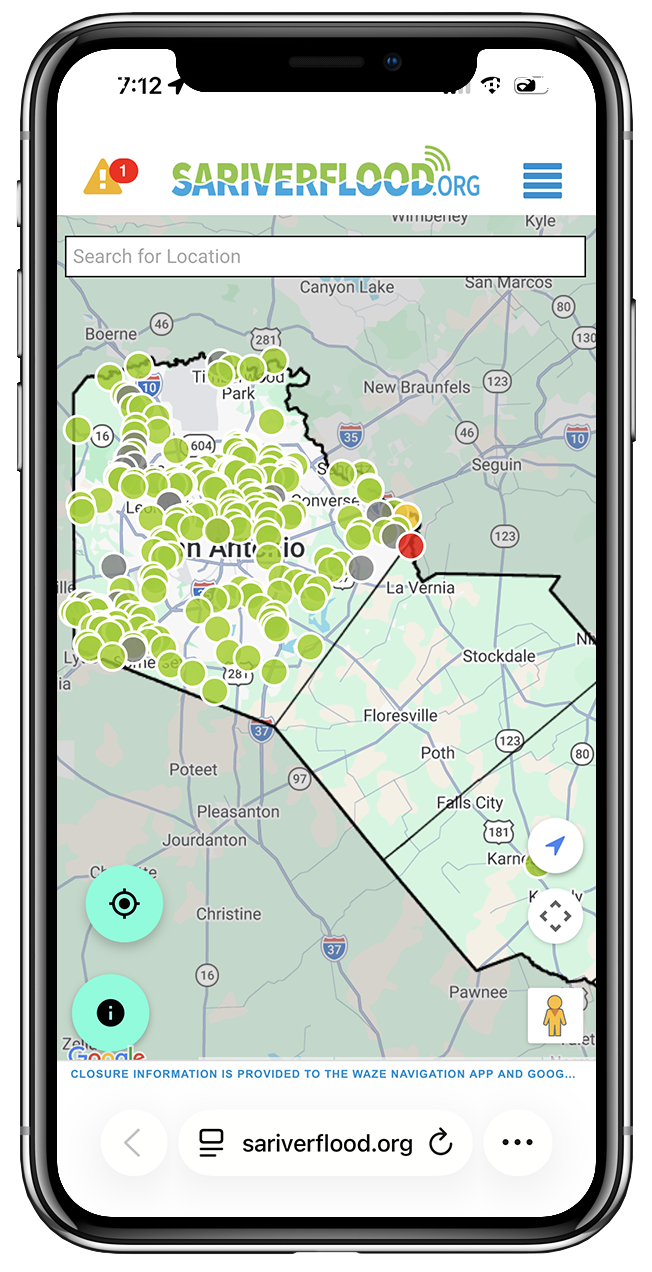
SARiverFlood.org shows road conditions at low water crossings across the region, using advanced sensors and gauges installed through a partnership between Bexar County, the City of San Antonio, and the San Antonio River Authority.
How to Read the Map
Each dot on the map indicates a location of a high water alert sensor, which detects rising water and automatically updates the map.
- Green means the road is open and safe to travel.
- Yellow means the water is rising.
- Red means the road is closed.
- Gray means that the sensor is inactive.
Sign Up for Alerts
When water rises to certain levels at those crossings, emergency alerts will be sent to those who have signed up to receive them.
To sign up for alerts, first create an account using your email address. Once your account is created, you can add a phone number and choose whether to receive alerts by text message, email, or both.
Click on individual dots on the map to sign up for text or email alerts. Sign up to receive alerts for low water crossings near your home, work, schools, and any other routes you or your family members travel regularly.
Use Google Maps or Waze
Sensor and gauge data that updates the map at SARiverFlood.org is also integrated with Google Maps and Waze. If you use these apps to navigate while driving, they will show when roads are closed due to flooding and suggest alternative routes.
Flood Safety Resources
City of San Antonio
- City of San Antonio – Floods
- Office of Emergency Management
- Flood Preparedness Guide
- Homeless Resource Guide
National Weather Service
- Flood Safety for You and Your Family
- Food and Water Safety During Hurricanes, Power Outages, and Floods (Food and Drug Administration)
- Flood Safety one-pager (English)
- Flood Safety one-pager (Español)
- Turn Around Don’t Drown™, NWS/NSC
- Safety in 60 Seconds: Flood Decision Making
Texas Ready
Flood Safety Downloads
National Weather Service
- Water Resources Fact Sheet
- Flood Safety for You and Your Family
- Flood Preparation and Flood Safety (National Flood Insurance Program)
- Food and Water Safety During Hurricanes, Power Outages, and Floods (Food and Drug Administration)
- Flood Safety one-pager
- Flood Safety one-pager (Español)
Texas Ready
More Downloads
- Flood Preparedness Guide (City of San Antonio)
- Homeless Resource Guide (City of San Antonio)
Flood-Smart Living: Simple Steps to Protect your Home
October 17, 2025
Your Flood Toolkit: Resources to Stay Informed and Prepared
October 3, 2025
On the Front Lines: The River Authority’s Role in Flood Response
September 19, 2025
Flash Floods Uncovered: How they happen and why they’re dangerous
September 5, 2025
NextGen Flood Warning System: A Smarter, Safer Future
August 22, 2025