
What Is a Flash Flood?
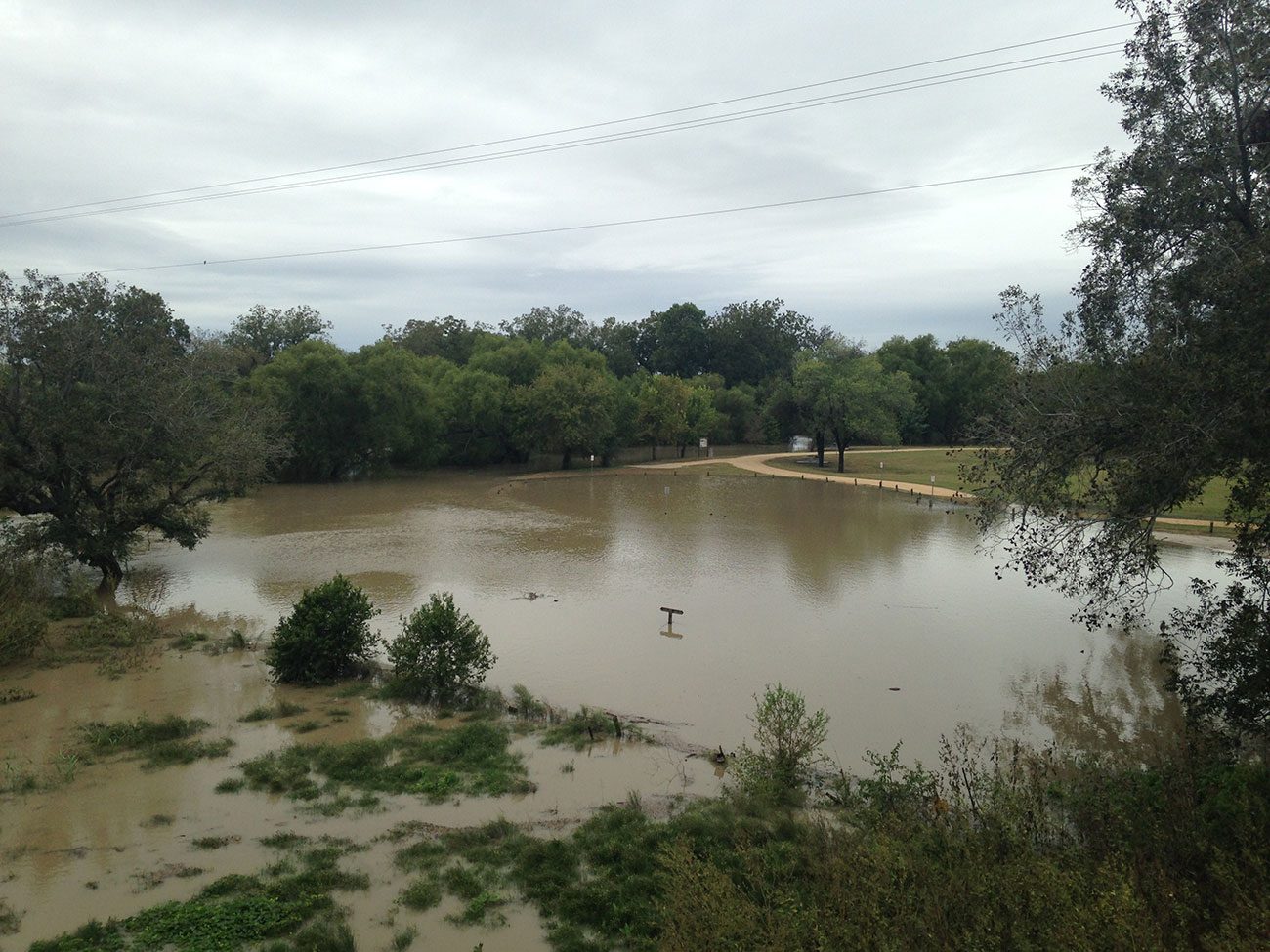
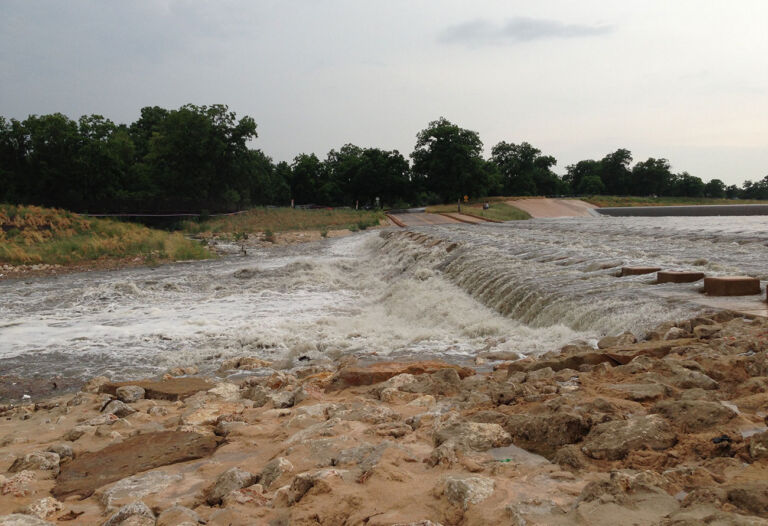
A flash flood is a sudden flood that can take just a few minutes or several hours to develop.
Flash floods typically happen in areas that receive sustained rainfall over several days or a large amount of rain in a short time. However, they may also occur when a dam or levee fails.
Flash floods are the number one storm-related killer in the United States.
Roughly 1 in 6 flood deaths that occur in the U.S. happen in Texas.
More than half of all flood deaths occur when people drive into floodwaters.
Male Texans are nearly twice as likely as female Texans to die in vehicle-related flood accidents.
As little as six inches of moving water can knock you off your feet and make a vehicle difficult to control.
Most cars can be swept away in as little as 12 inches of moving water.
Flood watch means be prepared
A Flood Watch is issued when conditions are favorable for flooding. It does not mean flooding will occur, but it is possible. When there’s a flood watch in your area, you should be prepared to take further action, such as evacuation, at a moment’s notice.
Flood warning means take action
Flood Warnings and Flash Flood Warnings are issued when a flood is imminent or already happening. Pay close attention to local weather updates and follow evacuation instructions quickly.
Source: National Weather Service
Why Floods Are So Frequent and Dangerous Here
San Antonio and Bexar County sit in a region known as Flash Flood Alley, which stretches along the Balcones Escarpment from the Dallas-Fort Worth area, through the Texas Hill Country, and into South Texas.
The climate and topography of this area make it prone to sudden, intense flooding. A mixture of warm air from the Gulf of Mexico and cool air from the north creates an unstable atmosphere, making it difficult to predict the amount of rainfall.
Shallow, clay-rich soil and limestone bedrock make the ground in this region slow to absorb water. Long periods of drought harden the soil, making its absorption even slower.
This region also contains some of the fastest-growing cities and towns in the U.S. Increasing development leads to more ground covered with asphalt and concrete, which increases the amount of stormwater runoff.
Flash floods occur as rainfall runs off the surface toward the nearest waterways. In areas with steep hills and rocky terrain, floodwaters can move especially fast, making flash floods even more dangerous.
How to Prepare for Floods
Subscribe
Create an account and sign up to receive alerts at SARiverFlood.org. Scroll down for instructions on how to read the map and get alerts.
Check
Check local floodplain maps to see if your home is in a flood-prone area.
Plan
Make an emergency plan for your household.
Create
Create an emergency supply kit with a few days worth of necessities.
How to Use
SARiverFlood.org
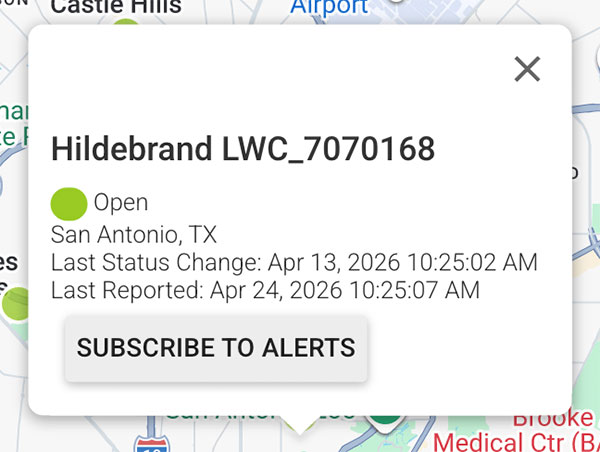
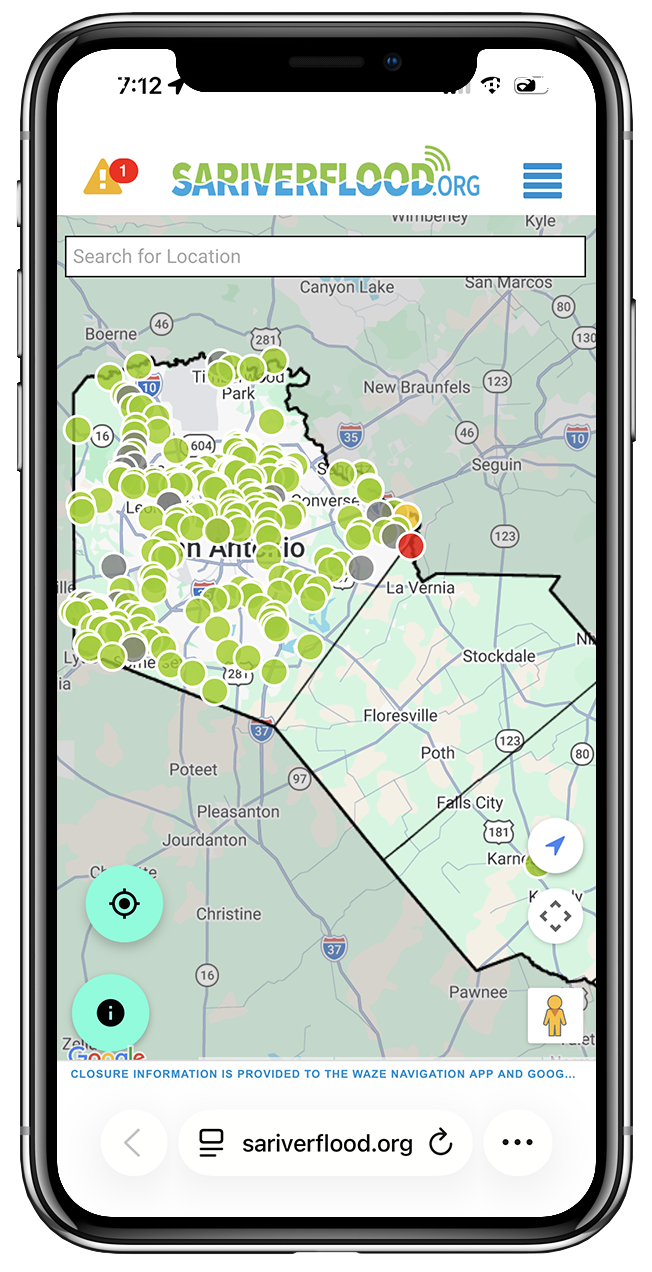
SARiverFlood.org shows road conditions at low water crossings across the region, using advanced sensors and gauges installed through a partnership between Bexar County, the City of San Antonio, and the San Antonio River Authority.
How to Read the Map
Each dot on the map indicates a location of a high water alert sensor, which detects rising water and automatically updates the map.
- Green means the road is open and safe to travel.
- Yellow means the water is rising.
- Red means the road is closed.
- Gray means that the sensor is inactive.
Sign Up for Alerts
When water rises to certain levels at those crossings, emergency alerts will be sent to those who have signed up to receive them.
To sign up for alerts, first create an account using your email address. Once your account is created, you can add a phone number and choose whether to receive alerts by text message, email, or both.
Click on individual dots on the map to sign up for text or email alerts. Sign up to receive alerts for low water crossings near your home, work, schools, and any other routes you or your family members travel regularly.
Use Google Maps or Waze
Sensor and gauge data that updates the map at SARiverFlood.org is also integrated with Google Maps and Waze. If you use these apps to navigate while driving, they will show when roads are closed due to flooding and suggest alternative routes.
Helpful Links
For Educators
- Owlie Skywarn for Kids Floods (weather.gov)
- Children’s Flood Coloring Book (weather.gov)
- Prepare with Pedro: Flood Activity Book (English)
- Prepare with Pedro: Flood Activity Book (Spanish)
- Prepare For the Storm Worksheet (weather.gov)
- Emergency Preparedness Activity Book (Texas Ready)
- Supplemental Hazard Lesson: Floods (FEMA)
For Community Leaders
- Preparing Your Community (City of San Antonio)
- Disaster Planning for Individuals Experiencing Homelessness (SAMHSA)
- Community Official Flood Resource Guide (Texas Water Development Board)
- Disaster Training and Education (FEMA)
Schedule a Flood Safety Presentation
Want to schedule a flood safety presentation at your school, workplace, or community event? Reach out to the River Authority.
Floods Don’t Care Digital Toolkit
Want to spread the word and encourage your friends, family, and followers to take their flood safety seriously?
This digital toolkit has downloadable graphics, fact sheets, and suggested messaging to help make it easier to raise flood safety awareness with just a few clicks.
SOCIAL MEDIA POSTS
Sample Posts
Copy these posts to your preferred social media platform, and share them along with the graphics provided above, to help spread flood safety awareness to your followers.
Floods Don’t Care who’s in the car. Most cars can be swept off the road in as little as one foot of moving water. Floods are dangerous. Let’s spread the word about flood safety. Check out FloodsDontCare.com
Floods Don’t Care about the size of your truck! Seriously, just 18 inches of moving water could turn your truck or SUV’s tires into floaties and carry you away. Floods are dangerous. Let’s stay safe, y’all! FloodsDontCare.com
Floods Don’t Care if you’re a risk-taker. Walking or driving through moving water can put your life in danger. And for what? Not worth it, IMO. Stay smart, and stay safe. FloodsDontCare.com
Floods Don’t Care what’s on the line. And when floodwaters are rising fast, everything is on the line. Let’s brush up on our flood safety together at FloodsDontCare.com.
Floods Don’t Care about your safety. But I do! Join me in spreading awareness about flood safety. Together, we can help San Antonio reach zero flood deaths. Learn more at FloodsDontCare.com
TIL Texas is the U.S. state with the most flood deaths, and over half are vehicle related. Floods happen, but flood deaths don’t have to. Let’s spread the word about flood safety. Learn more at FloodsDontCare.com
“It’s just water. I can make it. It’s not that deep. I don’t have time to turn around. That car in front of me made it.”
#FloodsDontCare what excuses you make. Driving through floodwaters is always a risk. Let’s brush up on flood safety together. FloodsDontCare.com
Let’s be real. #FloodsDontCare about your safety. But I do! So you should sign up for alerts at SARiverFlood.org.
Just create an account, and explore the map to find low water crossings on roads you travel often. Sign up for alerts, and you’ll get a text or email if they become unsafe to travel. It’s quick, easy, and could literally save your life.
EMAIL OUTREACH
Sample Message
Use this email template to contact your employers, frequented businesses, schools, churches, nonprofits, or any other organization with a platform that can help spread awareness.
Hello,
I’m reaching out as a concerned citizen who is invested in seeing greater awareness of flood safety practices in our communities.
Fifteen people were killed in Bexar County floods last year, making it the deadliest flood year since 1998. More than 130 people were killed last summer in Texas Hill Country, one of the deadliest floods in our nation’s history.
These deaths are a tragic reminder of the threat flash flooding poses to families and communities here in Flash Flood Alley. What makes these flood deaths even more tragic is that they’re largely preventable through education and awareness.
Tools like the NextGen Flood Warning System and SARiverFlood.org have the potential to help transform the way our communities prepare for and respond to flash flood emergencies. But they will only save lives if people are aware they exist and how to use them.
As an organization with trust in the community, you have the ability to help spread the word about flood safety. Doing so could help to save lives, and make a big difference for families who support you.
Please consider visiting FloodsDontCare.com and sharing some of the resources that the San Antonio River Authority, Bexar County, and City of San Antonio have made available to the public. By working together, we can achieve zero flood deaths.